If you have ever sat at the kitchen table, looked at the bank balance, and thought, “We earn decent money, so where is it all going?”, you are not alone. That question sits right at the heart of what is the difference between a budget and a spending plan, because the answer is not just about words. It is about how you think, how you make decisions, and whether your money system actually works in real life.
For many Australians, the word budget feels heavy. It can sound like cutbacks, guilt, and being told no. A spending plan feels different. It suggests choice, purpose, and direction. That difference matters more than most people realise.
What is the difference between a budget and a spending plan?
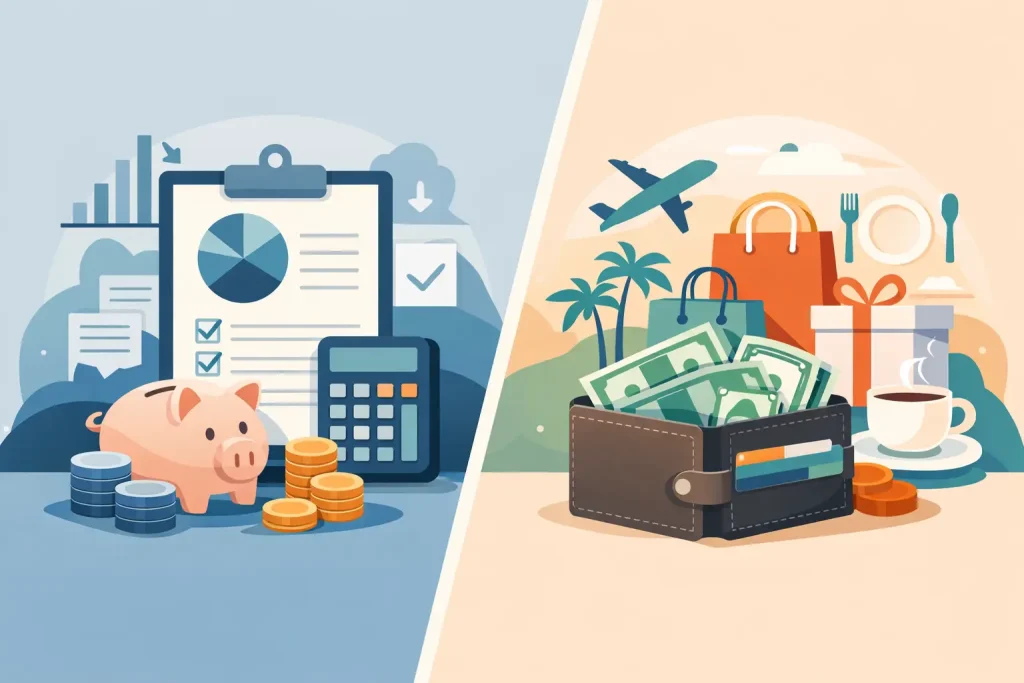
At a basic level, a budget is usually seen as a record of how much money comes in and how much goes out. It often focuses on limits. You set category amounts, try not to go over them, and review the damage later.
A spending plan does include those same numbers, but the mindset is different. A spending plan tells your money where to go before it disappears. It is proactive rather than reactive. Instead of only tracking expenses, you are making deliberate decisions about how your income will support your bills, goals, savings, and everyday life.
That may sound like a small shift, but in practice it changes everything. One approach feels like restriction. The other feels like control.
Why the wording changes the outcome
Plenty of people quit budgeting not because they are lazy or bad with money, but because the process feels punishing. They create a budget in a burst of motivation, make it too tight, then life happens. A school excursion comes up. The car needs tyres. Electricity jumps. Suddenly the plan feels broken, so they give up.
A spending plan tends to work better because it accepts reality. Real life is not perfectly predictable. Families have changing costs. Casual income can move around. Groceries rise. Medical bills appear out of nowhere. A good spending plan builds these truths in, rather than pretending they will not happen.
This is one of the biggest reasons people feel more successful with a spending plan. It is not softer or less disciplined. In many cases, it is more disciplined, because it asks you to face your actual spending patterns and make decisions in advance.
A budget often looks backwards. A spending plan looks forwards.
Traditional budgets are often built from last month’s spending. You gather statements, total things up, and see where the money went. That has value, especially if you have no idea what you are currently spending.
But a spending plan takes the next step. It asks, “What do we want our money to do from here?” That question brings your values into the picture.
Maybe your priority is getting out of credit card debt. Maybe it is building a house deposit. Maybe it is finally getting ahead enough that Christmas does not go on a buy now, pay later account. A spending plan connects your income to those goals. It gives every dollar a job.
That is why people often find a spending plan more motivating. You are not just trying to spend less. You are trying to build something better.
The practical difference in everyday households
Let us make this simple.
A budget might say you can spend $250 a week on groceries, $80 on petrol, and $60 on eating out. If you go over, you feel like you failed.
A spending plan still sets amounts, but it starts with the full picture. Income comes in. Essential bills are covered. Irregular costs are allowed for. Debt repayments are planned. Savings goals are included. Then your flexible spending is worked out based on what is genuinely available.
That means your grocery number is not just a guess or a wish. It sits inside a complete money system.
This is especially important for households that feel like they are always behind. If your mortgage or rent, utilities, insurances, school costs, and debt repayments are not clearly mapped out, day-to-day spending can look like the problem when it is really a planning problem.
Is one better than the other?
In theory, either can work. A well-built budget can be effective. A poorly built spending plan can still fail. The tool is only as good as the thinking behind it.
But for most people, a spending plan is the more useful approach because it is easier to stick with over the long term. It feels more constructive. It reduces shame. It creates visibility before spending happens, not after.
That matters because consistency beats intensity every time. A money system does not need to be perfect to change your life. It needs to be clear enough to use every week.
What a spending plan should include
If you want a spending plan to work, it needs to cover more than the obvious monthly bills. This is where many households come unstuck.
Plenty of people remember rent or mortgage payments, phone bills, and groceries. Then they get hit by car registration, rates, dental costs, school uniforms, birthdays, or annual subscriptions. Those expenses are not emergencies. They are predictable costs that were simply not planned for.
A proper spending plan includes fixed expenses, variable living costs, irregular expenses, debt repayments, savings, and future goals. It also leaves some room for life. If every dollar is squeezed too tightly, the plan becomes unrealistic.
That is not an excuse for loose spending. It is a reminder that a workable system has to reflect how people actually live.
Why budgets can feel restrictive
When people say, “I hate budgeting”, they usually do not mean they hate being organised. They mean they hate feeling judged by their own numbers.
A traditional budget can trigger that feeling because it is often framed around sacrifice. Cut this. Stop that. Do without. While some spending does need to change, that message alone rarely creates lasting momentum.
A spending plan reframes the conversation. Instead of asking, “What do I have to give up?”, it asks, “What matters most, and how do I fund it?”
That shift helps people stay engaged. It turns money management into a decision-making process rather than a punishment.
What is the difference between a budget and a spending plan when income is irregular?
This is where the difference becomes even more important. If you are self-employed, working casual shifts, earning commission, or juggling changing family payments, a rigid budget can become frustrating very quickly.
A spending plan is usually better suited to variable income because it can be built around priorities. You know what must be covered first, what can flex, and where extra income should go when it arrives.
That gives you a stronger sense of control, even when your pay is not consistent. You may not be able to predict every dollar, but you can still have a clear plan for handling it.
The emotional side matters too
Money is never just maths. It affects relationships, confidence, stress levels, sleep, and the way people feel about themselves.
If your money system makes you feel constantly behind, it will be hard to keep using it. If it helps you feel calm, clear, and in charge, you are much more likely to stick with it.
That is another reason the language of spending plans matters. It supports a healthier relationship with money. It says you are not just cutting back. You are choosing where your money goes so your household can move forward.
For many people, that shift is the turning point. They stop reacting and start leading.
So what should you use?
Use the approach that helps you act consistently. If the word budget works for you, fine. Keep it. But if budgeting has always felt like a cycle of enthusiasm, blowouts, and guilt, it may be time to try a spending plan instead.
The goal is not to use fashionable language. The goal is to create a system that covers the bills, reduces financial pressure, and helps you make real progress.
That is why Simply Budgets has long focused on the idea of a spending plan. It is practical, realistic, and built for ordinary households who want more than good intentions. They want a method they can actually live with.
When your money has a plan, you make better decisions before the pressure hits. And that is often the moment things begin to change – not all at once, but steadily, confidently, and for the better.